
Bringing Design to the city
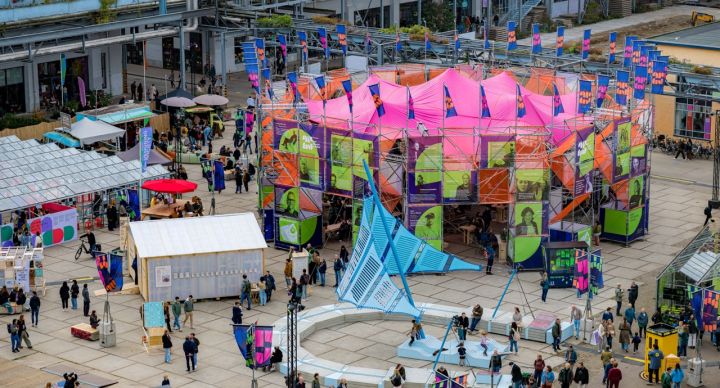
Now in its third edition, the Grand Projects Open Call invites designers to think ambitiously about what design can do in the public realm. Are you working on an installation, exhibition, or spatial intervention ready to inhabit the city? This is your opportunity to bring it to life on Eindhoven’s most prominent squares during Dutch Design Week 2026 (17–25 October).
Together with the Dutch Design Foundation and Bureau Binnenstad Eindhoven, selected teams receive support to turn ambitious proposals into shared urban experiences—connecting, inspiring, and sparking lasting impact.
Apply with your Grand Project – deadline 13 March
At the heart of DDW: past experiences
Below, we reflect on some of the Grand Projects at the heart of previous DDW editions, creating a shared stage that connects, inspires, and sparks lasting impact.

De Wachtkamer
“Resilience is a muscle that can be trained both individually and collectively.”
Nanne Brouwer & Anneloes de Koff: With De Wachtkamer (The Waiting Room), we demonstrate how small spatial interventions can significantly improve the living conditions of asylum seekers. It offers a concrete spatial solution and a tool to spark a broader conversation about dignified reception.
The project highlights both the necessity of such improvements and the impact that long-term residence in reception centres can have on mental and physical well-being.
A turning point for change:
Nanne Wytze Brouwer: As a social designer and carpenter, I design products, spaces and experiences that enable people to stretch their boundaries and strengthen their personal resilience. Resilience is a muscle that can be trained both individually and collectively. I do this in close collaboration with end users, residents and other stakeholders.
Anneloes de Koff: I use architecture as a turning point for change, through sustainable and carefully considered buildings. Together with coalitions and fellow professionals, I deploy architecture to address societal challenges and create environments that are positive, sustainable and meaningful. These designs aim to create spaces that function as anchors: calm, light-filled, healthy and hopeful.
Umbra Pavilion
“The project demonstrates how solar energy can be integrated into architecture and public space.”
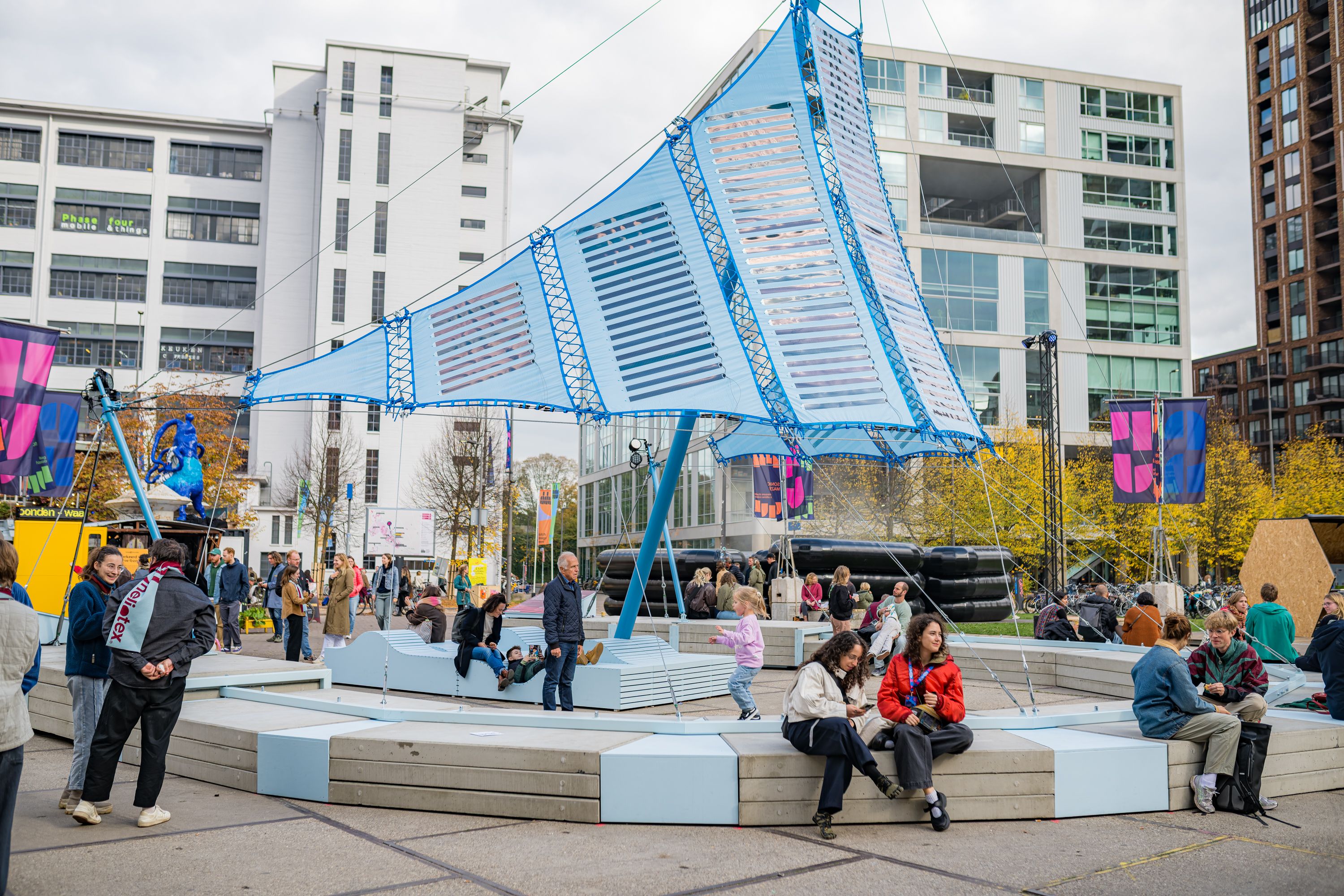
Pauline van Dongen: The Umbra Pavilion, designed in collaboration with Tentech, is an architectural installation featuring heliotex—an innovative solar textile that provides shade while generating solar energy. The project demonstrates how solar energy can be integrated into architecture and public space. It raises awareness of climate adaptation, helps reduce heat stress and adds a cultural dimension to the energy transition.
Where to next?
PvD: In 2026, the pavilion will be activated in the centre of Arnhem with a cultural programme, including Heat Action Day. In addition, the studio continues to explore new applications of heliotex in textile façades, temporary pavilions and other design contexts.
Responding to the world around us
PvD: I design textiles that respond to the world around us, working at the intersection of design, material innovation and technology. My projects engage both the body and the built environment, ranging from architecture using solar textiles to garments that communicate through light and touch.

The Outpost for Unreal Institutions
Pete Fung: The Outpost for Unreal Institutions is a mobile research pavilion exploring the work of designers, artists and cultural organisers who use institutions as a medium. During Dutch Design Week 2024, the pavilion functioned as a live studio at Eindhoven Central Station, where more than 150 fictional institutions were studied. Visitors were invited to pitch their own proposals for fictional institutions, opening up the creative process and making it more inclusive.
Where to next?
Since Dutch Design Week 2024, the project has continued to travel, including to Maastricht, and the research gathered from these encounters is now being compiled into a book, Directory of Unreal Institutions, set to be published in 2026/2027.
A conceptual designer
PF: I explore what lies behind individual and collective experiences. My work plays with words, images, interventions, collaborations, and theoretical and artistic research. I use ambiguity as a practice to decentralise narratives around shared knowledge, social relations, and designed environments and technologies. I graduated from the Design Academy Eindhoven in 2020 and founded the online platform Design for the Time Being, where I share observations on the realities that emerge between design and the act of designing.
Krijt je Rijk
“The best ideas are found on the street.”
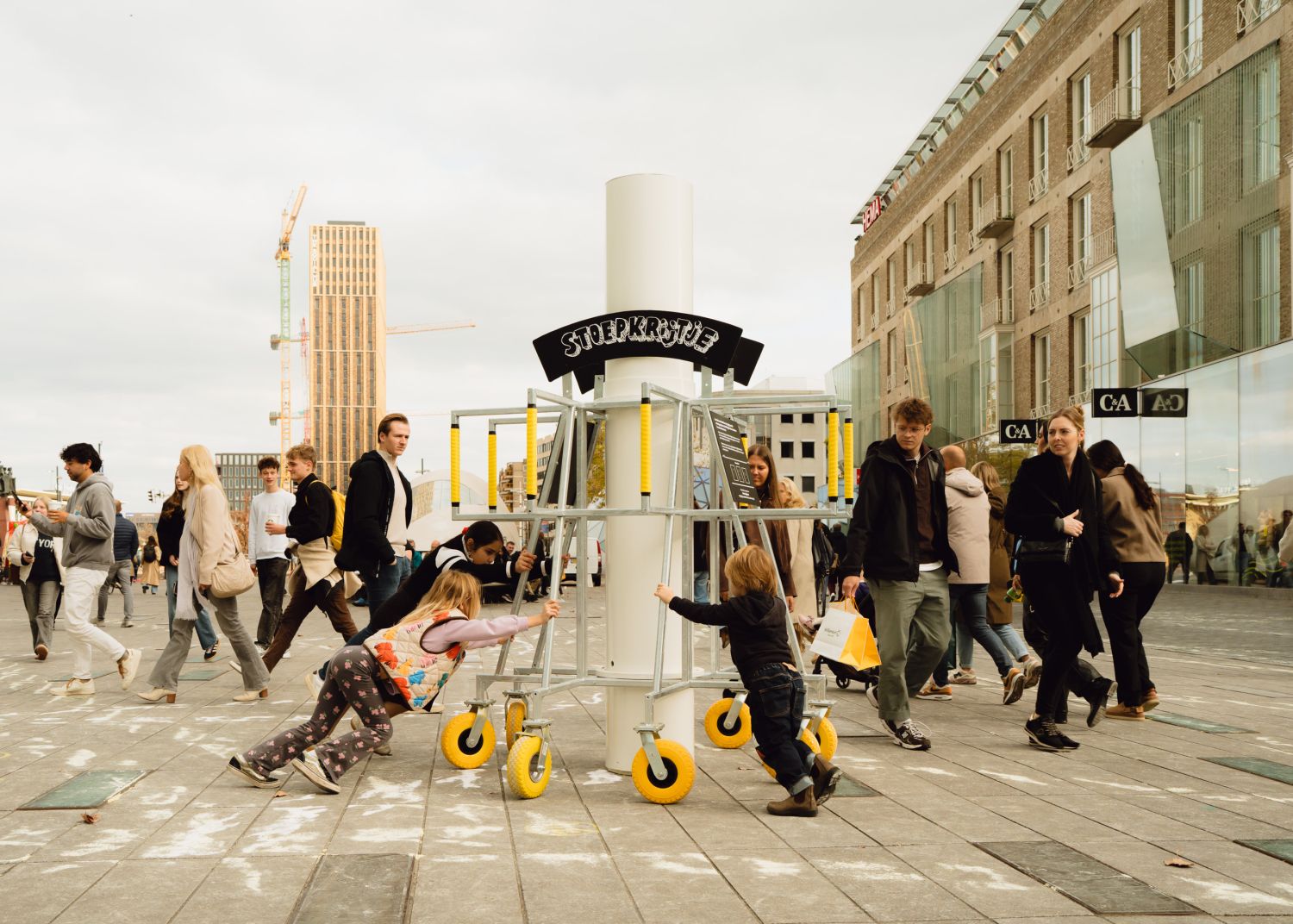
Reuringsdienst: Krijt je Rijk is a participatory installation in which the city becomes a large canvas using chalk. Everyone can take part, from passing pedestrians to intentional visitors. During Dutch Design Week 2025, the project even included an attempt to break the world record for the largest continuous chalk drawing. The project stimulates imagination, encounters and collective participation in public space.
The installation can be activated in other locations and contexts as a tool for urban activation and strengthening social cohesion, both nationally and internationally.
Deciding the future of the city
R: Our interventions literally and figuratively set people in motion and invite them to join the conversation about the future of the city. The best ideas are found on the street.

Water Basin Totem
“Material culture, memory and environmental narratives through a contemporary African lens.”
Salu Iwadi Studio: Water Basin Totem, presented during Dutch Design Week, examines the ecological and cultural implications of plastic consumption in coastal African regions. By transforming familiar domestic objects into monumental markers, the project reframes waste as both archive and warning.
The project continues to evolve as the research into circular materials and spatial storytelling expands, leading to new works that operate between sculpture, architecture and public engagement.
Material Culture
We, Toluwalase Rufai and Sandia Nassila, run a research-driven art and design practice. Our projects explore material culture, memory and environmental narratives through a contemporary African lens. We are interested in how objects can simultaneously function as cultural markers, critical commentary and spatial experiences.

Living Water – POND
“Nature not as a resource, but as a collaborative partner.”
Ermi van Oers: Living Water – POND makes water quality visible. Through light and colour, the installation reveals the condition of the water and gives it a voice. At a time when only a small percentage of European surface waters meet quality standards, the project aims to raise awareness and foster a deeper connection between people and the waters that surround them.
Because water quality often remains invisible, data alone can feel abstract. The installation translates information into a sensory experience. Colour evokes emotion, emotion can lead to empathy, and empathy encourages care and responsibility.
Where to next?
First presented as a Grand Project during Dutch Design Week 2024, Living Water – POND has since developed into (semi-)permanent installations in Utrecht and Rotterdam, with a new location in Amsterdam currently in development. Alongside the physical installations, a digital twin of the project has been created, allowing residents, municipalities and water authorities to follow the health of the water and gain insights into local water conditions.
The project is realised in collaboration with partners from science, government and industry, including Deltares, the Municipality of Utrecht, Hoogheemraadschap De Stichtse Rijnlanden, Erasmus University, Waternet and Rabobank, exploring how design can contribute to awareness and action towards healthier water systems.
Symbiotic relationships
Ermi van Oers is a bio-designer and founder of Nova Innova, an award-winning bio design studio. Her work explores the intersection of nature, technology and science, aiming to restore symbiotic relationships between humans and the natural world. Through her projects, she seeks to create experiences that reconnect people with nature and encourage a future in which we see nature not as a resource, but as a collaborative partner.
Touching Cellulose
“Making the principles of circular construction tangible and accessible to a wider audience.”
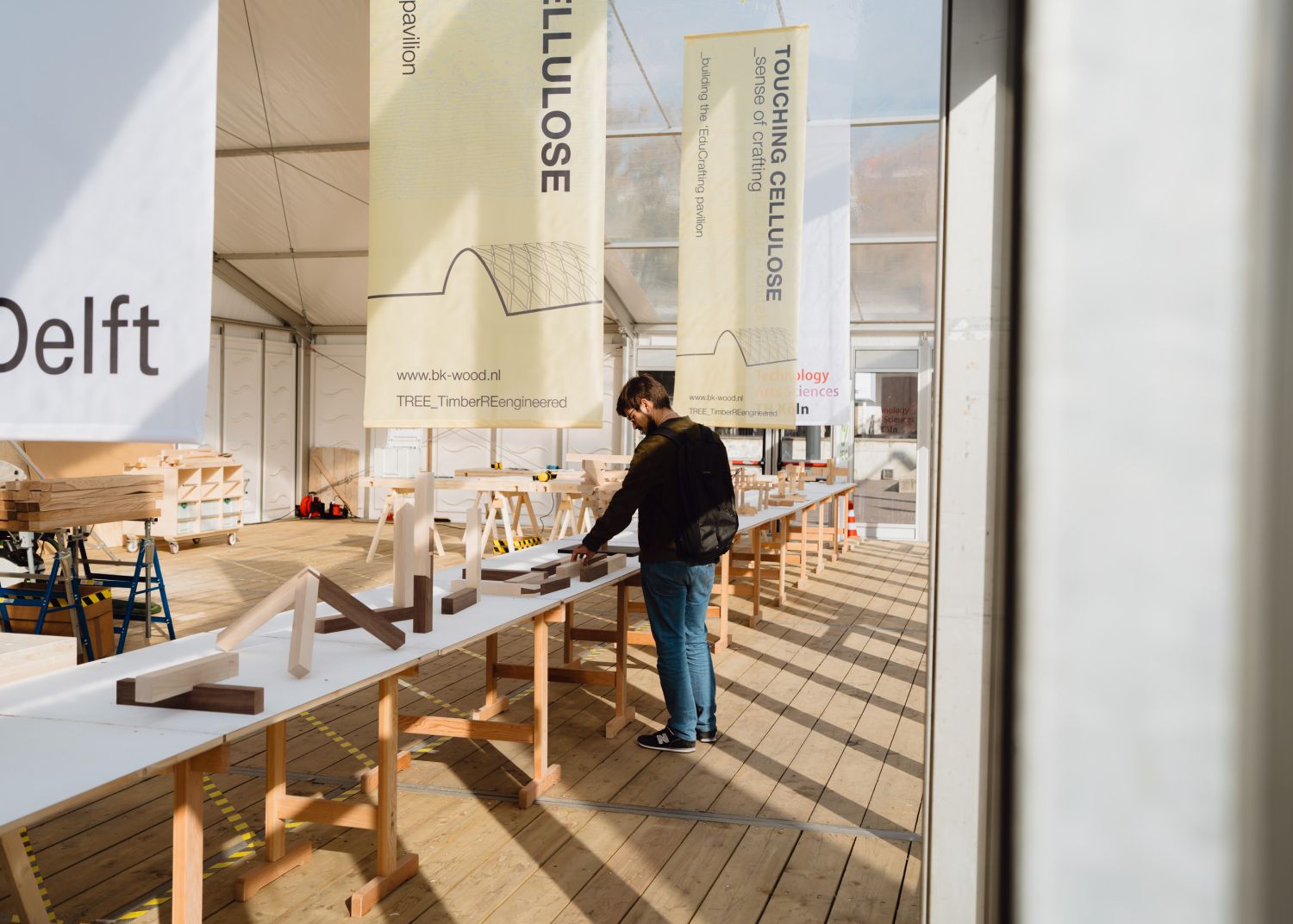
Gilber Koskamp + Max Salzberger: Touching Cellulose – Sense of Crafting translated timber research and education into a public, hands-on experience during Dutch Design Week. Through workshops and a full-scale pavilion, the project made principles of circular construction tangible and accessible to a wider audience.
At the centre of the project is the open Timber Joinery Database, a growing research platform that documents and systematises traditional and contemporary wood joinery techniques. The pavilion itself demonstrates how material-based design, digital tools and craft knowledge can come together in a fully demountable timber structure made from reused wood.
Where to next?
Following its presentation at Dutch Design Week, the pavilion will be reassembled and integrated into the BioBuild Lab at TU Delft, extending the project into an ongoing research and learning environment and continuing its circular lifecycle.
Innovative and circular timber construction
Gilbert Koskamp is an architect and engineer educated in Switzerland and based in Amsterdam since 1995. As founder and partner of Ssse | OvO Associates Architects, he combines architectural practice with research and education, with a focus on timber building technology, circular timber structures, and the health and wellbeing aspects of wood in the built environment.
Max Salzberger is an architect, craftsman, researcher and educator specialising in timber design, joinery and digital fabrication. With a background in craft education, he integrates material intelligence into contemporary architecture through his studio supercraft and through teaching and research at TU Delft, TH Cologne and ETH Zurich.
Together they founded the BK-Wood Group at TU Delft, where they collaborate in teaching and research, exploring innovative and circular timber construction through the integration of architectural practice, craft and building technology.